
Understanding MSP Pricing Models in Japan
Introduction: Why MSP Pricing Is So Hard to Pin Down
If you’ve ever tried to compare quotes from different Managed Service Providers (MSPs) in Japan, you’ve probably noticed something: no two proposals look the same.
Some price by device, some by user, and others by “service tier.”
One provider includes security monitoring in the base plan, another treats it as an add-on.
It’s a landscape where transparency varies — and where local factors like bilingual support, compliance, and after-hours coverage make pricing more complex than global averages suggest.
This guide breaks down how MSP pricing works in Japan, what affects the total cost, and how to evaluate whether a quote is fair for your organization.
Related: Learn more about how managed IT services work and why they’re gaining traction among international companies in Japan in our complete guide to IT Managed Services in Japan.
1. The Basics: How MSPs Structure Their Pricing
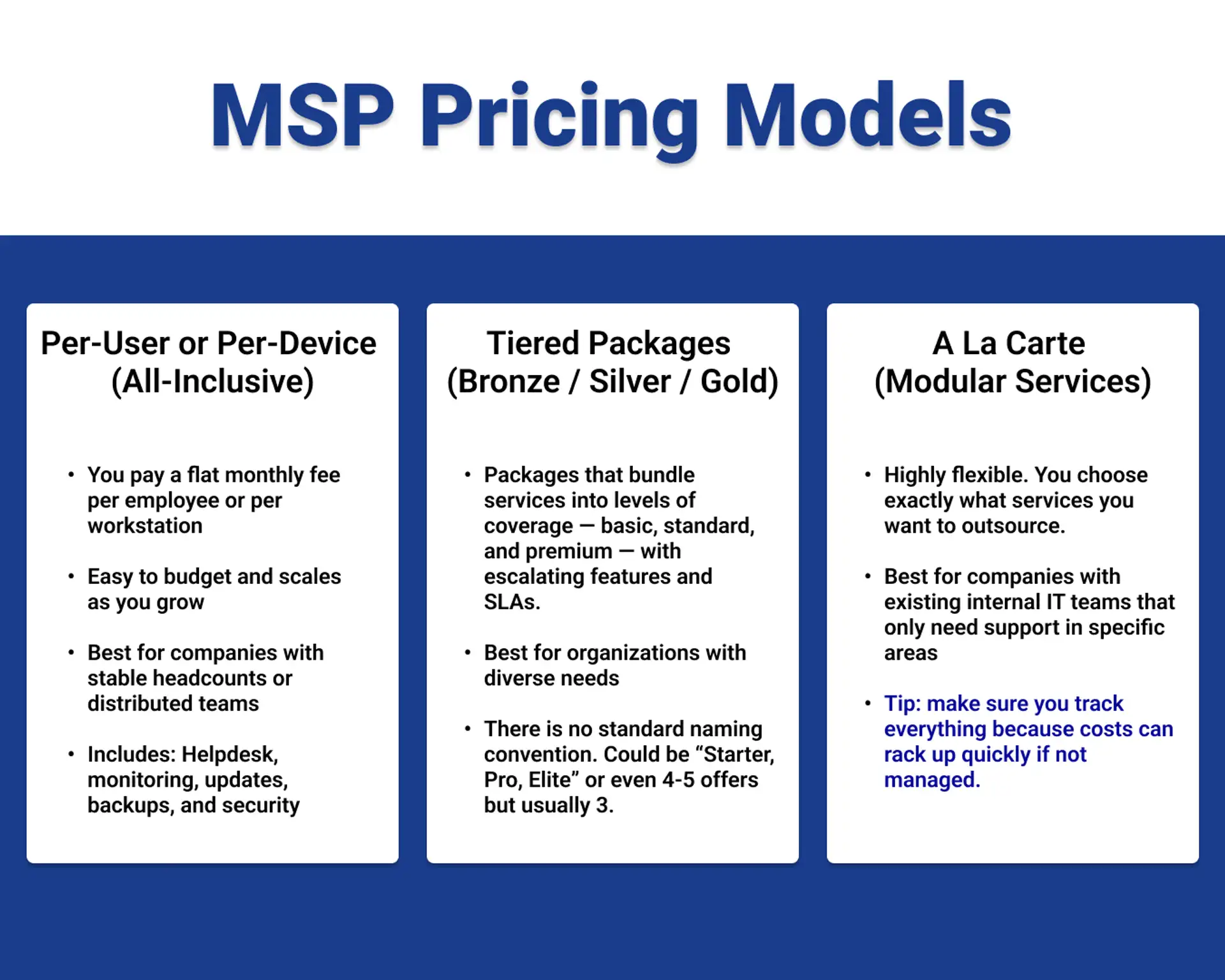
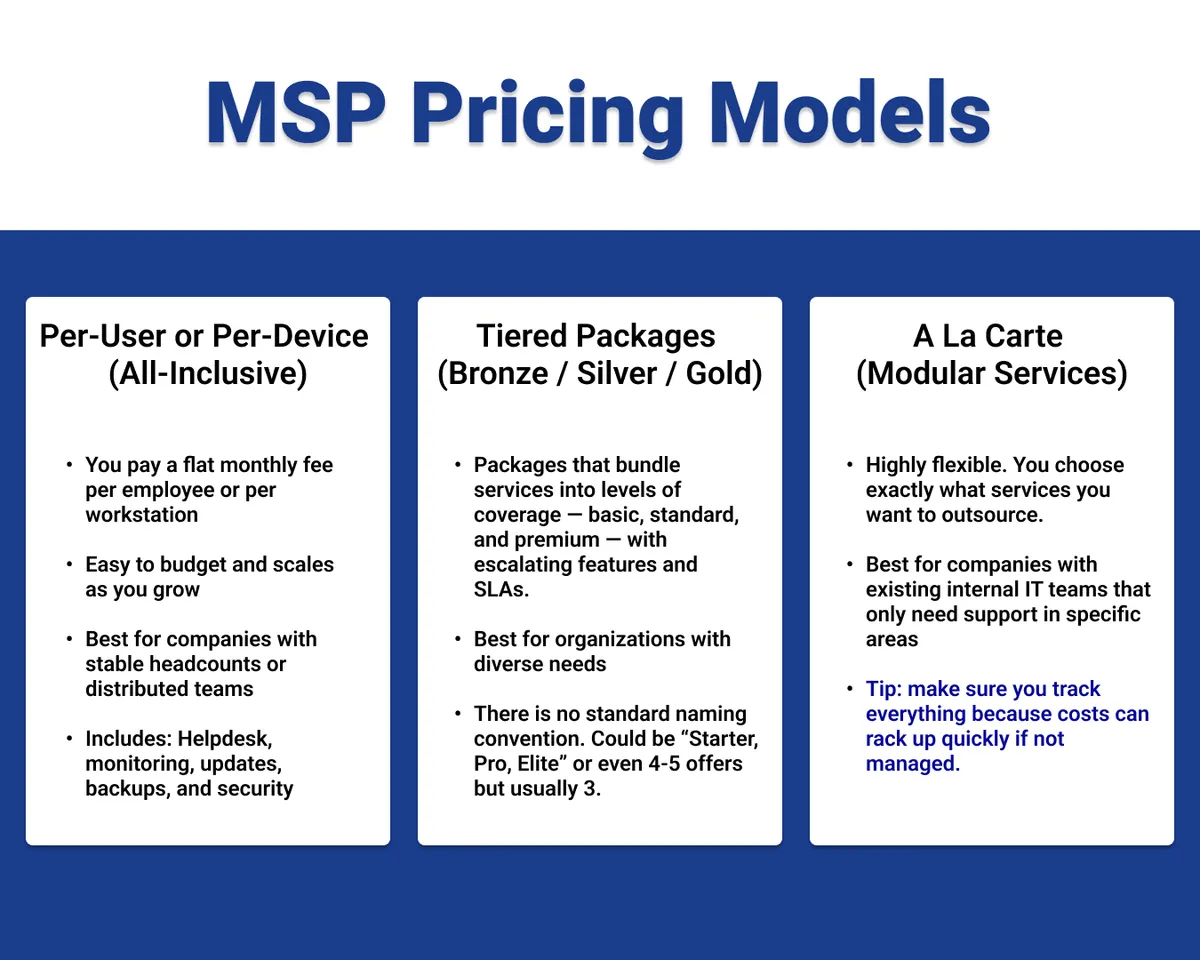
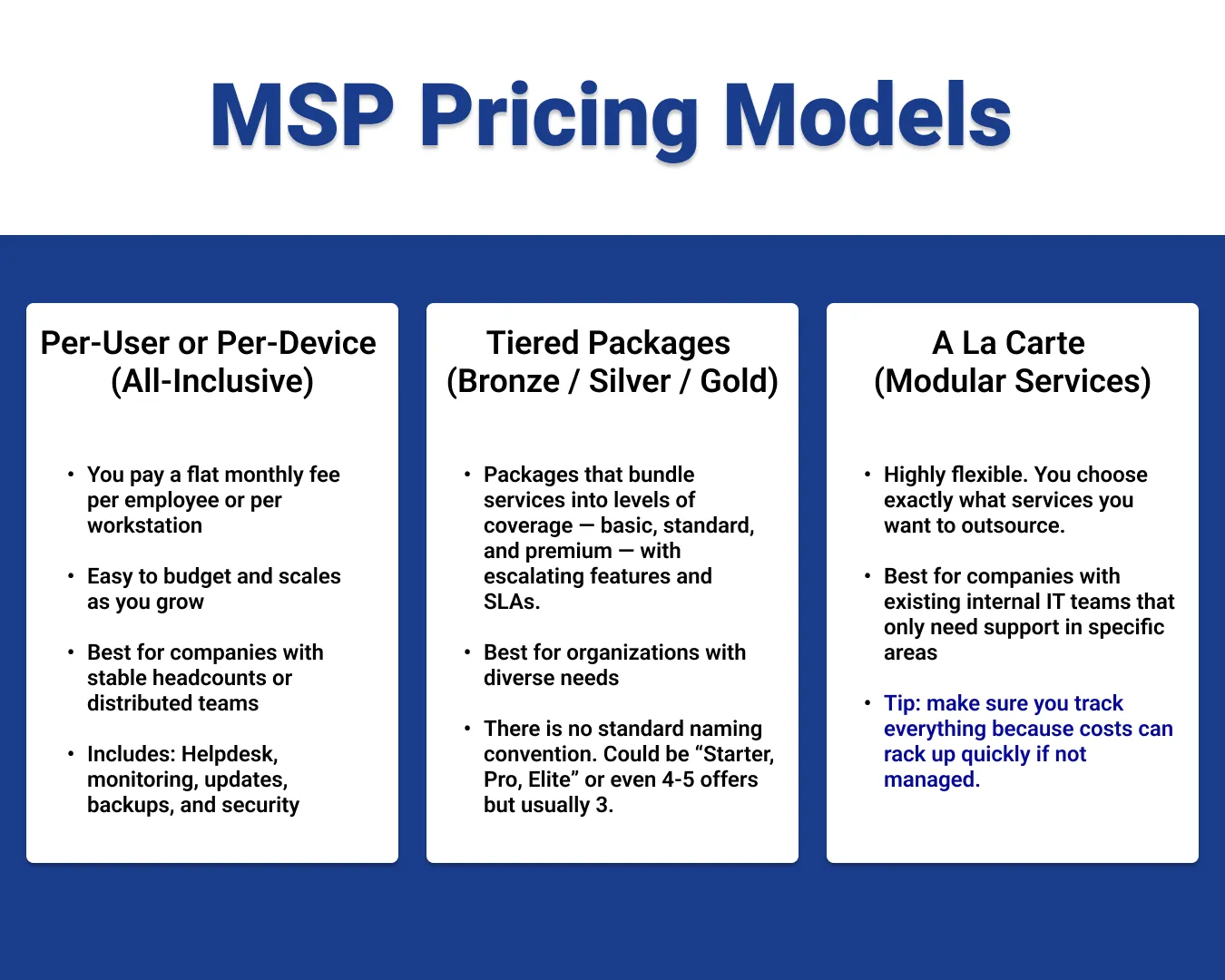
Managed Service Providers typically follow one of three pricing models — or a hybrid of them.
Understanding these helps you interpret proposals and align services with your business goals.
1. Per-User or Per-Device (All-Inclusive)
You pay a flat monthly fee per employee or per workstation.
This model is popular because it’s easy to budget and scales as you grow.
- Best for: Companies with stable headcounts or distributed teams
- Includes: Helpdesk, monitoring, updates, backups, and security
- Average Japan pricing: ¥15,000–¥35,000 per user per month for comprehensive coverage
Example:
A Tokyo retail chain with 120 employees and multiple store locations pays ¥18,000 per user monthly. This covers bilingual helpdesk support, network monitoring, and 24/7 response — all in one predictable fee.
2. Tiered Packages (Bronze / Silver / Gold)
These packages bundle services into levels of coverage — basic, standard, and premium — with escalating features and SLAs.
| Tier | Typical Coverage | Response SLA | Indicative Cost (Japan) |
|---|---|---|---|
| Bronze | Core monitoring & patching | 8x5 business hours | ¥10,000–¥15,000 / user |
| Silver | Adds helpdesk, basic security | Extended hours | ¥20,000–¥30,000 / user |
| Gold | 24/7 monitoring, on-site support, full compliance | 24x7 | ¥30,000–¥45,000 / user |
This model suits organizations with diverse needs — for example, a company might assign “Gold” to its head office and “Silver” to satellite branches.
3. A La Carte (Modular Services)
Rather than a package, you choose exactly which services to outsource.
Common modules:
- Network monitoring
- Security and compliance
- Cloud or server management
- On-site dispatch and logistics
- User support (bilingual or English-only)
This approach works well for companies with internal IT teams who only need coverage in specific areas.
However, costs can add up quickly if multiple add-ons are required.
2. What Makes Japan Different
MSP pricing in Japan isn’t just a matter of yen conversion. Local market realities directly influence cost.
Bilingual Expertise
Finding engineers fluent in both Japanese and English is difficult — unemployment among IT professionals sits under 1%.
MSPs must pay premium salaries for bilingual staff, especially those qualified in cybersecurity or infrastructure management.
That expertise directly impacts monthly fees.
Regulatory and Security Requirements
Compliance with Japan’s APPI (privacy law), PCI DSS, and global standards like GDPR adds layers of process, auditing, and documentation.
MSPs that maintain certified practices (ISO 27001, SOC 2, etc.) invest heavily in staff training and governance — costs reflected in pricing.
After-Hours Expectations
Retail and hospitality operations often require night and weekend coverage.
MSPs offering non-standard support windows (18:00–09:00, weekends, holidays) typically add a 15–30% premium — a figure consistent with Fusion Systems’ own projects for global retail brands.
On-Site Coverage
In Japan, in-person service remains highly valued.
Deploying engineers for physical interventions — cabling, network gear replacement, POS servicing — increases logistics and travel costs.
Top MSPs offset this with regional dispatch networks or local partner coverage.
3. Key Cost Drivers to Watch
When reviewing quotes, focus on the factors that drive real price differences — not just headline rates.
| Cost Driver | Impact | Notes |
|---|---|---|
| Number of users / devices | High | Core basis for per-user pricing |
| Service hours | Medium | 8x5 vs 24x7 coverage can double rates |
| Support language | Medium | Bilingual adds ~10–20% premium |
| On-site vs remote | Medium | Travel, coordination, and standby times |
| Security & compliance Scope | High | Heavily regulated industries cost more |
| Infrastructure complexity | High | Hybrid cloud + legacy systems require more monitoring |
| Tool licensing | Medium | Some MSPs include RMM, backup, antivirus licenses |
| Contract length | Low | Multi-year terms may lower rates 5–10% |
4. Comparing Managed Services to Internal Hiring Costs
To gauge value, compare the MSP fee against the total cost of hiring equivalent staff internally.
| Role | Average Annual Salary (Tokyo) | Monthly Equivalent |
|---|---|---|
| IT Manager (bilingual) | ¥10–13 M | ¥830,000–1,080,000 |
| Systems Engineer | ¥7-9 M | ¥580,000–750,000 |
| IT Manager (bilingual) | ¥4.5–6 M | ¥370,000–500,00 |
Add to that recruitment, turnover, training, software, and downtime risk.
For most mid-size enterprises, an MSP delivering comprehensive coverage across users and sites costs 30–50% less than maintaining equivalent in-house capability — while providing greater redundancy and expertise.
5. How to Evaluate MSP Quotes
When assessing proposals, move beyond the monthly figure.
Ask:
- What exactly is included? (Monitoring, patching, backup, helpdesk, onsite visits, licensing)
- What are the SLAs? (Response times, escalation paths, uptime targets)
- What’s billed separately? (After-hours, hardware, third-party software, project work)
- How transparent are reports? (Dashboard access, regular reviews, documentation)
- How is success measured? (KPIs, service credits, quarterly business reviews)
A professional MSP will welcome these questions — and answer them in clear, quantifiable terms.
6. Estimating a Fair Budget Range
Based on industry benchmarks and local conditions:
| Company Size | Typical Monthly Range | Coverage Scope |
|---|---|---|
| 20-50 users | ¥400,000–¥800,000 | Core IT + monitoring |
| 50–150 users | ¥1.0–2.5 million | Full managed coverage, 8x5 or 24x7 |
| 150–500 users | ¥2.5–6.0 million | Enterprise or multi-site operations |
| >500 users | Custom / tiered | Dedicated resources, hybrid co-management |
These figures vary depending on sector, compliance, and support hours — but they provide a realistic starting point for planning.
7. The Value Behind the Price
While cost is central, the right MSP adds value that isn’t easily itemized:
- Reduced downtime: Proactive monitoring prevents outages before they hit revenue.
- Strategic alignment: Regular IT roadmap sessions align infrastructure with business goals.
- Scalability: Adding users or sites requires no new hiring or capital expense.
- Predictability: Fixed monthly pricing enables stable financial forecasting.
Ultimately, the cheapest option isn’t always the best — but the most transparent usually is.
Conclusion: Pricing Transparency as a Partnership Indicator
If a provider can’t clearly explain its pricing model, it’s a red flag.
Managed services are long-term partnerships built on trust, visibility, and measurable outcomes — not just low rates.
By understanding how pricing works in Japan’s MSP market, you can evaluate proposals on more than numbers alone.
Ask the right questions, compare total value, and choose a provider that delivers not only reliable systems — but confidence in every invoice.
Need a clearer picture of your IT costs?
Fusion Systems Japan helps international companies in Tokyo optimize IT spending with predictable, transparent managed service pricing.
Contact Us